

Scoliosis
Scoliosis is a sideways curve of the spine. It starts small and becomes more pronounced over time, which is why finding it early matters so much.
At a glance
- How it starts
- Usually with a single misaligned vertebra. The body compensates, and the spine gradually takes on an “S” or “C” curve.
- Who it affects
- Most often early-teenage girls - but degenerative changes such as osteoporosis mean it can appear in older adults too.
- How it is found
- An X-ray examination is definitive. Orthopaedic tests and checks of hip, shoulder and leg alignment support the diagnosis.
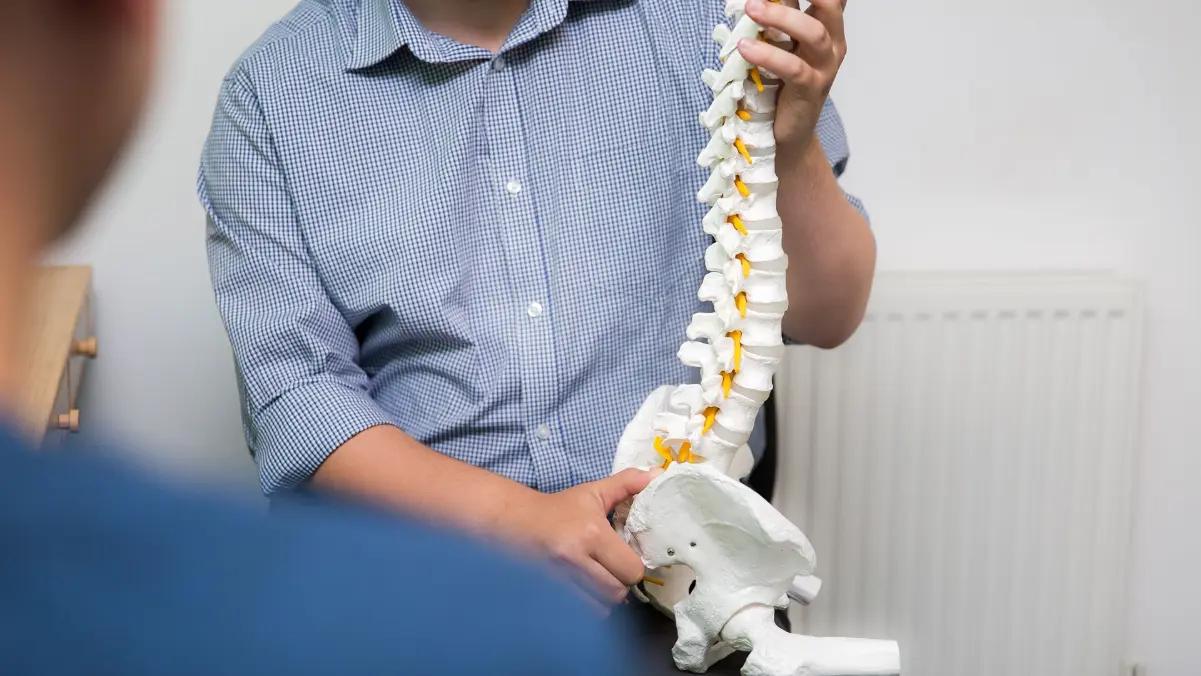
With scoliosis the spine develops a small bend which then progressively becomes worse. By the point it is well established there are often serious health effects to contend with.
A minimum 60-degree sideways bend of the spine is required for a scoliosis diagnosis.
Found early and treated appropriately with chiropractic therapy, the bending of the spine may be stopped from getting worse before it reaches that point.
The origin of scoliosis has been the subject of a great deal of investigation and there is little agreement on the cause. What research does show is that it is more common in early-teenage girls than in boys of any age.
Starting Off Small
A slight bend in the spine usually begins with the simple misalignment of one vertebra. The body is compelled to compensate, and over time the spine assumes the “S” and “C” shaped curvature the condition is known for.
It is often parents and children who notice it first, because the shoulders and pelvis become clearly uneven. Unlike the majority of other spinal problems, scoliosis cannot be treated by correcting posture.
It is not only a young person’s condition. Degenerative illnesses such as osteoporosis can cause the bones of the spine to lose their typical structure, and the body responds by creating lateral bends to keep the head level. If the source of the bending is not treated, serious effects including heart and lung problems may follow.
What Happens When You Come In
No GP referral, no obligation, and care built around what matters to you.
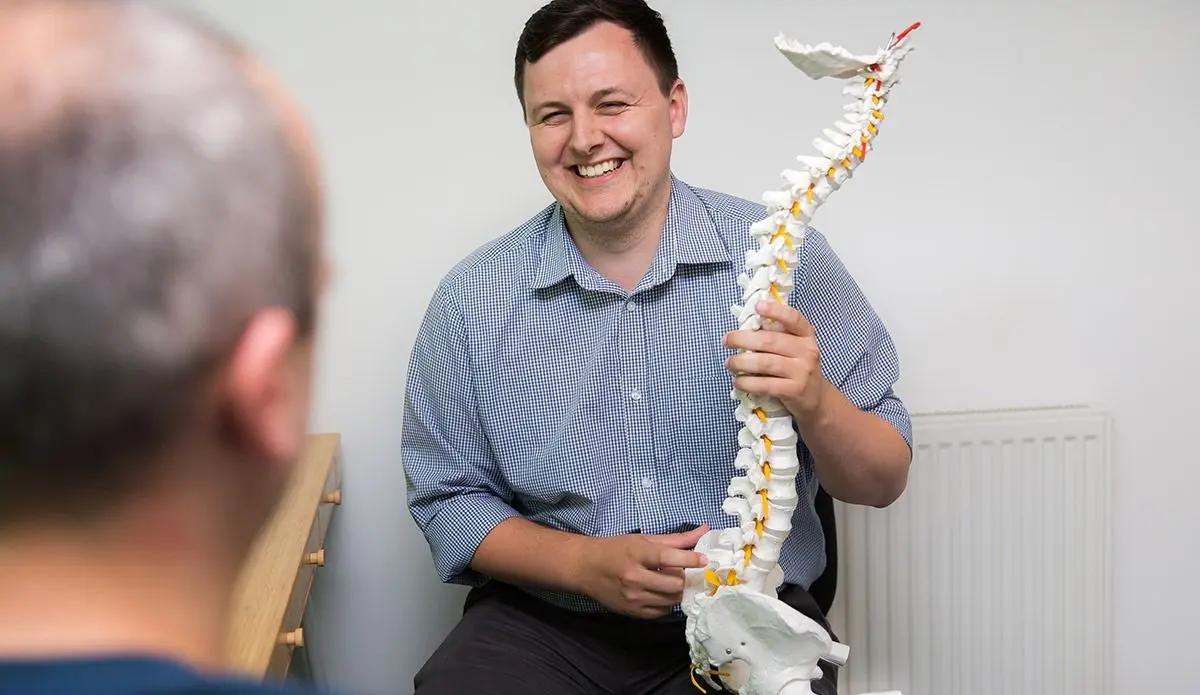
Book Directly
You do not need a referral from your GP. Chiropractic is a primary healthcare profession in the UK, so you can come straight to us - including evening and Saturday appointments.
Your First Consultation
We take your full medical history and examine you properly. Nothing is assumed from the spot that hurts, because the place you feel pain is rarely the place it starts.
A Diagnosis in Plain English
We explain what we have found and what is causing it, then recommend the most appropriate course of care for your symptoms, lifestyle and goals.
How Scoliosis Is Diagnosed
An X-ray examination by your chiropractor is the reliable way to establish whether the spine is curved. A number of orthopaedic tests, such as the Adams Position Test, help with the diagnosis.
We also assess the hips, shoulders and legs for the length variations that can indicate scoliosis developing.
Chiropractic Care for Scoliosis
Numerous studies have shown that receiving chiropractic therapy may halt or reduce the growth of scoliosis.
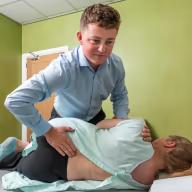
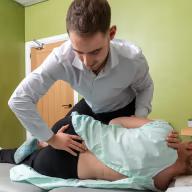
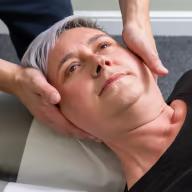
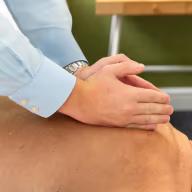
Your chiropractor will ask about your complete medical history to identify anything that may be contributing - your employment, your lifestyle, past traumas, what you do outside work. Having taken those into account, they will usually make precise spinal adjustments intended to undo the body’s compensatory actions and support the healing process.
Questions we get asked
Is chiropractic care suitable for everyone?
Yes. We consider your medical history at consultation and adapt our techniques to your health status and age. We treat patients from two weeks old through to their 90s, including pregnant women, for whom we have specialised pregnancy pillows.
What education and training do chiropractors undertake?
Chiropractors spend between 4 and 5 years in full-time university study and graduate with either a BSc in Chiropractic (Bachelor of Science Degree) or an MChiro (Masters in Chiropractic). Our practitioners hold master’s degrees.
How long will it take for me to recover?
Recovery timelines vary depending on a number of factors. We take the time to understand your symptoms, lifestyle and goals before recommending the most appropriate course of care.
Other conditions
We’ll take the time to find out what’s causing your problem and explain it clearly. Together we’ll make a plan to get you better, and keep you better.




- 657
- Google reviews across our clinics
- 2017
- The year our Burton clinic opened
- 2
- Clinics across Burton and Derby